Curriculum Vitae
Preview and download the latest CV in PDF format.
If the preview does not load in your browser, use the download button above.
I'm David Penteado, a PhD candidate in History at the University of São Paulo, Brazil.
My current research projects cover the nineteenth-century history of science and environmental history, focusing on the role of the global exchange of technological and scientific knowledge. More specifically, the development of the science genre in Brazilian print culture and the influence of scientific thought in society.
My work draws on the analysis of historical documents, the compilation and codification of the periodical's content, the examination of the relevant official bibliography, and the historiography of science journalism and communication.
Current Projects
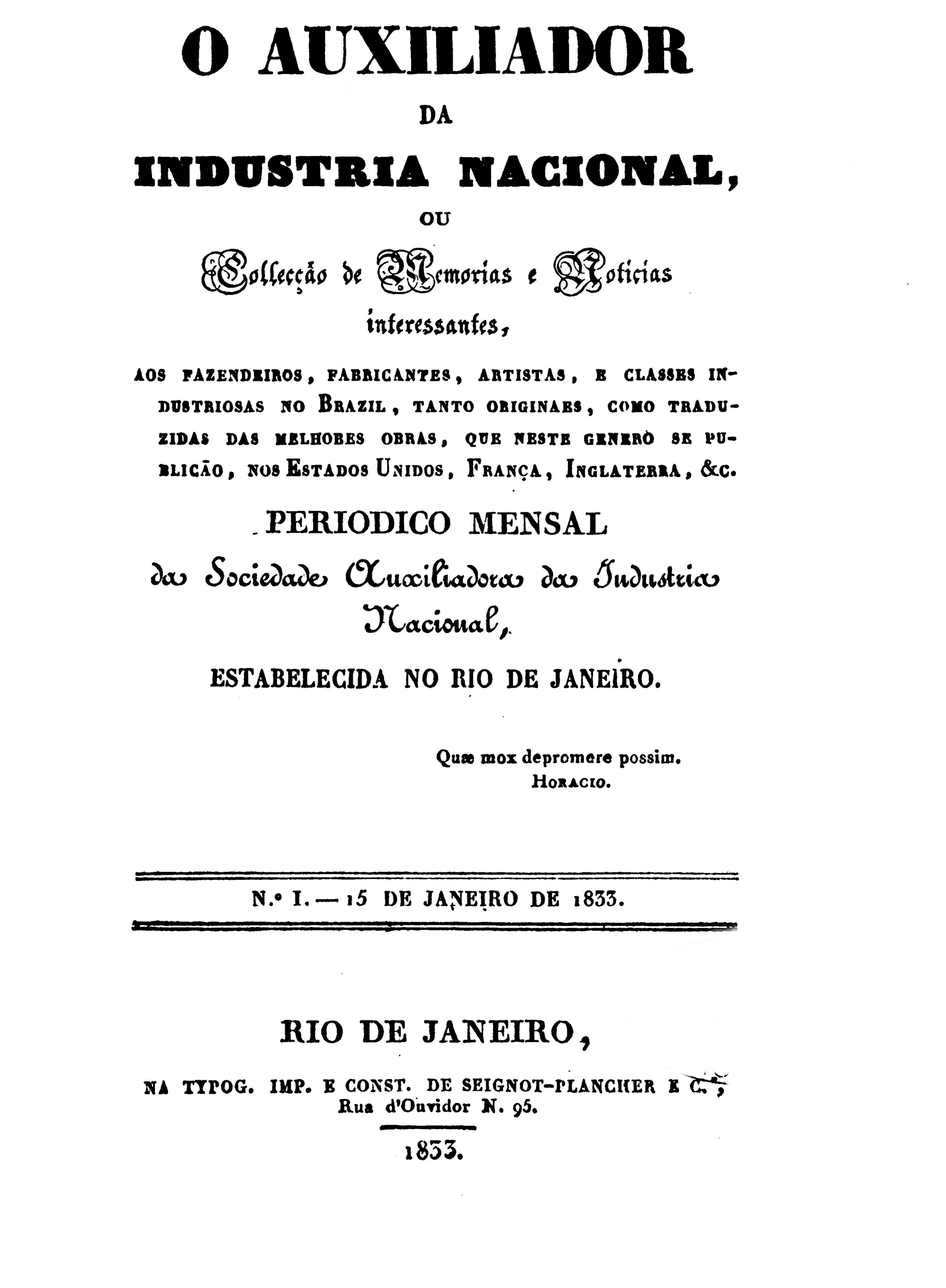
Local periodicals & Transnational knowledge circulation O Auxiliador da Indústria Nacional (1833-92; 1896; 1903)
In the first half of the 19th century, in Rio de Janeiro, dozens of periodicals that proposed to popularise scientific knowledge and its techniques were published with a common objective: a civilising project for the new-born nation.
Objectives
Among these periodicals, in 1833, a periodical derived from this tradition stood out for its longevity and specificity in the search to improve the country’s production methods, O Auxiliador da Industria Nacional (The Helper of National Industry). The periodical was created by the Sociedade Auxiliadora da Indústria Nacional (Society for the Promotion of the National Industry), having circulated for sixty years and extinct only in 1896. This research seeks to understand the history and functioning of the periodical and which transformations it underwent, editorial and institutional. Through the analysis of institutional documents, the compilation and classification of the periodical's content, the examination of the relevant official bibliography, and the historiography of science journalism and communication, this project proposes to analyse the history of the periodical over its six decades of publication, the thematic evolution of its content, and the participation of the Brazilian government on its funding and distribution.
This research asks how scientific knowledge became publicly legible and politically consequential in nineteenth-century Brazil through the periodical press, when both publishing infrastructure and scientific institutions were still consolidating. Centring on O Auxiliador da Indústria Nacional (1833-92, with reappearances in 1896 and 1903), funded and distributed by the Imperial Government, it situates the journal within transnational circuits of scientific communication and within the practical demands of imperial governance. It advances three historiographical claims: that O Auxiliador belonged to the wider world of science periodicals, that it served a dual political function for state modernisation and associational advocacy, and that it relied heavily on foreign technical and scientific material.
Methodologically, the project combines narrative reconstruction with corpus work, including the indexing and classification of the journal's full run, totalling more than six thousand items. That approach reveals how editorial practice, institutional strategy, and state patronage shaped what could circulate as useful knowledge, and how the withdrawal of public support contributed to the journal's closure in 1892. Two companion articles extend the argument by foregrounding institutions and people: one shows, through the journal, statutes, and ministerial records, how O Auxiliador functioned as a state-facing instrument for scientific popularisation and programmes of improvement and national integration; the other reconstructs editorial labour through a prosopographic profile of editors and committees, highlighting the prominence of professionals whose careers were closely tied to state administration.
Related Publications
- David F. de M. Penteado. O periodismo científico no Brasil do século XIX: o caso d’O Auxiliador da Indústria Nacional. PhD diss., Universidade de São Paulo, 2026.
- David F. de M. Penteado, “Arquivo complementar: O periodismo científico no Brasil do século XIX: o caso d’O Auxiliador da Indústria Nacional [Supplementary archive: Scientific periodicals in nineteenth-century Brazil: the case of O Auxiliador da Indústria Nacional],” Mendeley Data, V5, January 22, 2026. DOI (accessed February 28, 2026).
- César A. F. da Silva, & David F. de M. Penteado, “O perfil dos redatores do periódico O Auxiliador da Indústria Nacional (1833-1896),” Revista Diálogos Mediterrânicos 12 (2017): 132–53. Link
- David F. de M. Penteado, “O Auxiliador da Indústria Nacional: Um periódico a serviço do Estado brasileiro? (1833-1896),” Trilhas da História 8 (2018): 126–43. Link
Projects
Local periodicals & Transnational knowledge circulation
This project how scientific knowledge became legible, mobile, and authoritative in Brazil through serial print, and what the periodical press reveals about the making of scientific culture on the imperial periphery. It centres on three linked questions with clear historiographical stakes: how “science” was defined and staged in a publishing market shaped by late institutional development and strong dependence on imported texts; how editors, associations, and state actors used journals to translate, excerpt, and repurpose foreign material as part of programmes of agricultural and industrial improvement; and how the material and organisational conditions of printing, funding, distribution, readership, and editorial labour shaped what could circulate as knowledge. Methodologically, the cluster treats periodicals not as passive repositories but as infrastructures, using article level indexing, classification, and digital analysis to track genres, provenance, and thematic change at scale, while keeping close reading in view to show how communication practices, institutional agendas, and political economy jointly structured the Brazilian scientific public sphere.
SciPerBR (1808-1840)
Periodicals are made of articles. A digital portal for exploring early Brazilian scientific and medical periodicals.

Objectives
SciPerBR maps, indexes, and contextualises early nineteenth-century periodicals to support research on the circulation of scientific knowledge in Brazil.
Related Publications
- No publication related to this project yet.
Frederico Leopoldo César Burlamaque (1803-1866)
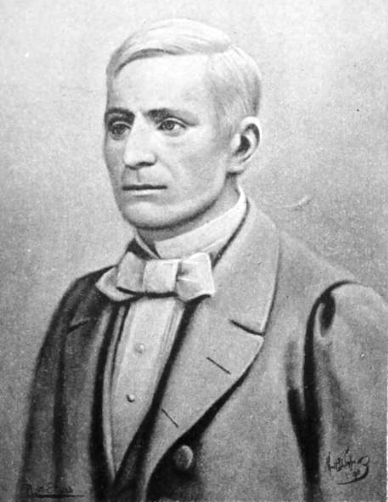
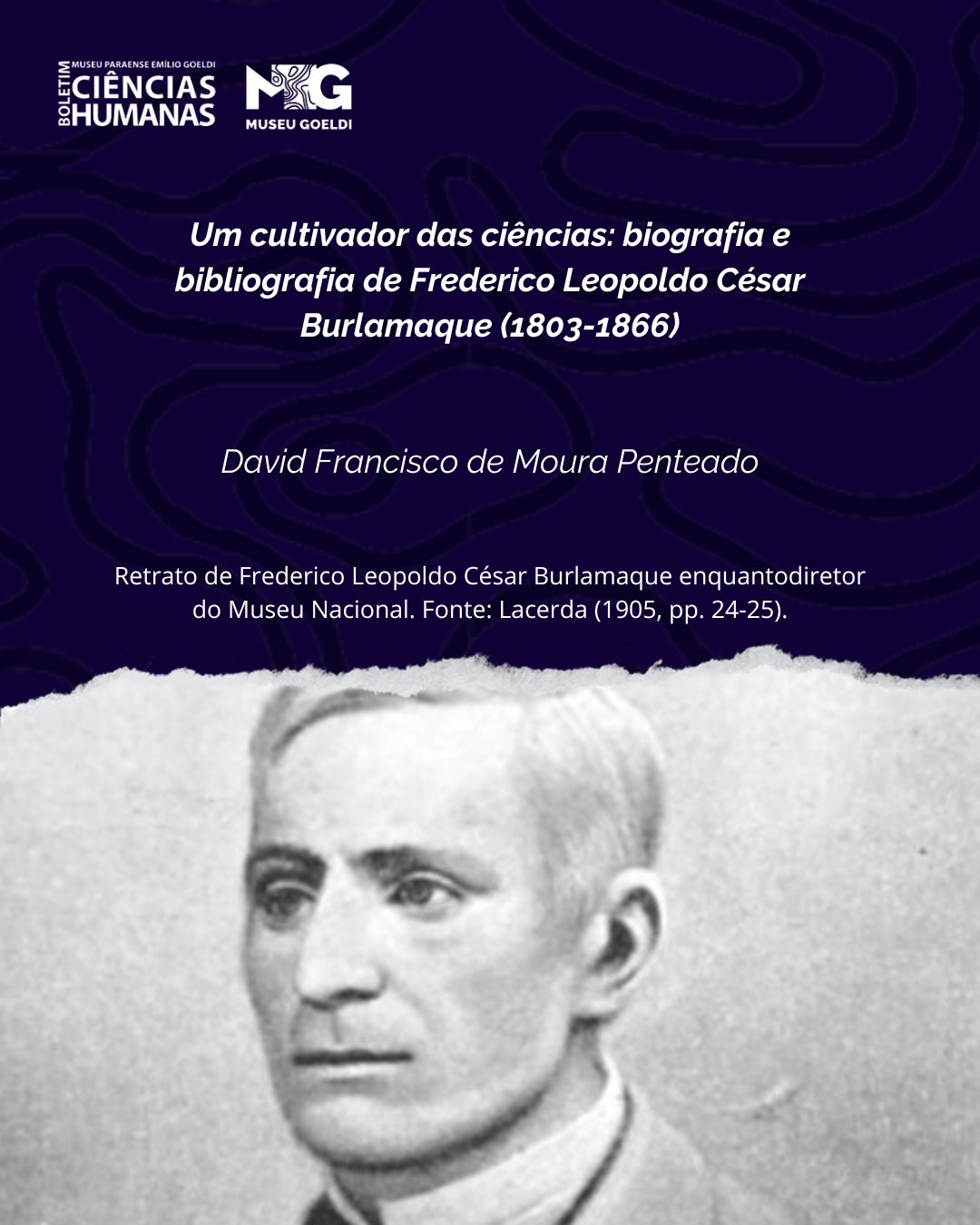
A biographical and bibliographical study of Frederico Leopoldo César Burlamaque that reconstructs his career and networks to show his central role in Imperial Brazil’s scientific culture and agricultural improvement, supported by a supplementary bibliography dataset.
Objectives
This article provides a foundational biography and bibliography of Frederico Leopoldo César Burlamaque (1803–1866), treating him as a key but still understudied actor in the history of science in Imperial Brazil. Drawing on primary documentation and historiography, it reconstructs his professional trajectory and associational networks, and uses that life history to illuminate the Court's learned sociability, local scientific culture, and the politics of agricultural improvement. It argues that Burlamaque mattered not only as a prominent man of science, but because his agricultural modernisation projects fed directly into public policy, his agricultural manuals achieved international significance, and his research helped pioneer geology and palaeontology in Brazil. To make the contribution cumulative, the study is accompanied by complementary documentation that organises and locates Burlamaque's bibliography, designed to support further research on his writings, projects, and their transnational knowledge circuits.
Related Publications
- David Francisco de Moura Penteado, “Arquivo complementar: Um cultivador das ciências: biografia e bibliografia de Frederico Leopoldo César Burlamaque (1803–1866) [Supplementary archive: A cultivator of the sciences: biography and bibliography of Frederico Leopoldo César Burlamaque (1803–1866)]” (dataset), SciELO Data, April 17, 2025. DOI (accessed February 28, 2026).
- David F. de M. Penteado, “Um cultivador das ciências: biografia e bibliografia de Frederico Leopoldo César Burlamaque (1803–1866),” Boletim do Museu Paraense Emílio Goeldi. Ciências Humanas, 20:1 (2025): 1–21. DOI
Animal Mobility, Environment, and Modernisation
These case studies ask how animal bodies and animal movement became practical problems of governance in nineteenth-century Brazil, at the intersection of environmental history, the history of science, and the historiography of improvement. They examine how climatic and environmental explanations, including degeneration theory, redistributed responsibility between nature and human management, and how that redistribution shaped policy choices, expertise, and public spending. They also trace how animals were mobilised as tools of modernisation, whether as livestock to be “regenerated” or as transport solutions imagined for the sertões, and how transnational circuits of print, expertise, and scientific prestige conditioned what counted as a credible intervention. Taken together, the studies use failed or contested programmes to foreground the material limits of state-led modernisation, showing how scientific authority and ambitious plans could travel farther than infrastructure, labour discipline, and the everyday practices required to sustain animal life.
Acclimatization, Agricultural Modernization, and Camelids
Ideas, knowledge, people, and animals were in rapid transit in the nineteenth century, occasionally at the same time.
Objectives
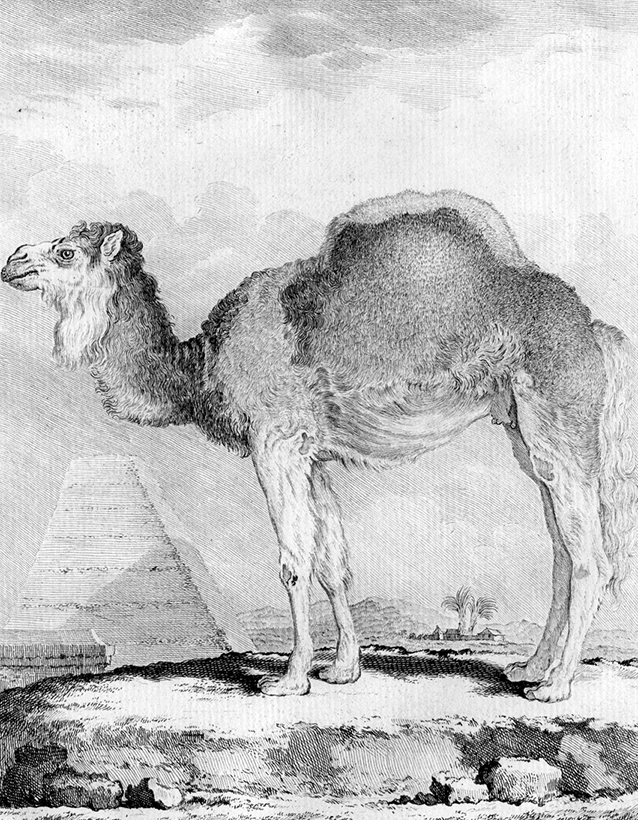
This research analyses the unsuccessful government-sponsored experiment to introduce and naturalize dromedaries (Camelus dromedarius) in the northeastern Brazilian province of Ceará between 1857 and 1867. While the scheme is not unknown, it has not yet received a dedicated and thorough examination. Using the lenses of the global exchange of knowledge, transnational scientific enterprises, the history of camelids, and the worldwide phenomenon of acclimatization, I argued that the naturalization plan was tailored following the principles of animal acclimatization while aimed at wider efforts by the Brazilian government to modernize national agriculture.
Related Publications
- David F. de M. Penteado. "Brazilian Dromedaries: A History of Acclimatization, Agricultural Modernization, and Camelids, 1857-1867," Isis 115:2 (2024): 241-66. DOI
Animals, Degeneration, and Buffon
The long 19th century was a period of many developments and technical innovations in agriculture and animal biology, during which actors sought to incorporate new practices in light of new information. But not all developments were equal.
Objectives
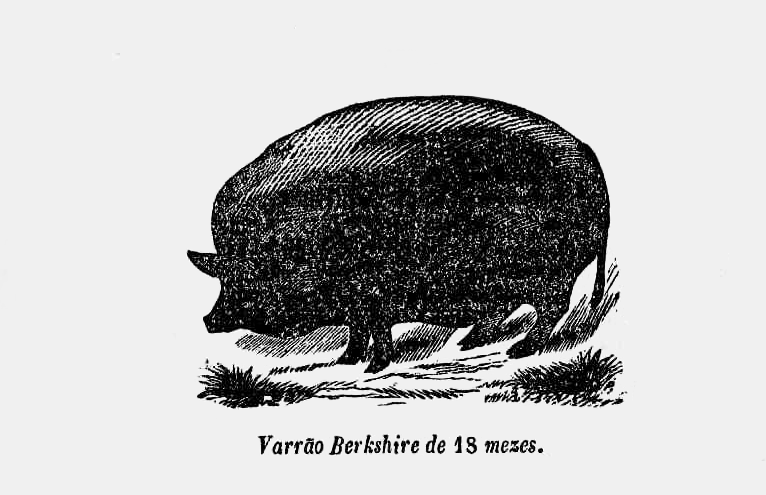
By the middle of the century, however, while heredity steadily became the dominant concept in animal husbandry...
Related Publications
- David F. de M. Penteado. "A Tale of Enduring Myths: Buffon's Theory of Animal Degeneration and the Regeneration of Domesticated Animals in Mid-19th Century Brazil," Journal of the History of Biology 56 (2023): 715-42. DOI
Learned Societies & National Improvement
This project examines how learned societies and individuals operated as infrastructures of improvement in nineteenth-century Brazil, mediating between civil sociability, expert knowledge, and state power. It asks how organisations such as the Sociedade Auxiliadora da Indústria Nacional acquired quasi-official authority by being consulted and subsidised by government, and by developing the practical capacities of an advisory body for technical and scientific matters. It also asks how those institutional arrangements translated projects into policy through concrete mechanisms such as periodical publication, translation and compilation, seed and technology circulation, and the evaluation of innovations and privileges. Finally, by following figures embedded in multiple associations, it investigates how individual careers turned associational spaces into levers of modernisation, showing how expertise, reputation, and transnational knowledge flows could be converted into public programmes and widely circulated agricultural guidance.
Sociedade Auxiliadora da Indústria Nacional (1825-1904)
Learned societies played key role in nineteenth century science communication and policy making, but the most prominent society of this kind in Brazil was understudied for a long time.
Objectives
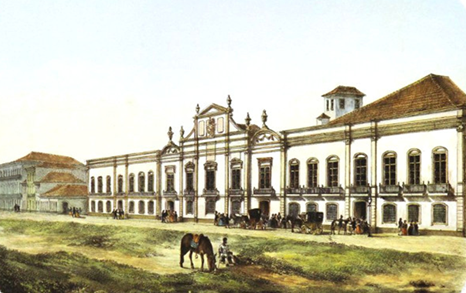
This article reinterprets the Sociedade Auxiliadora da Industria Nacional (1825-1902) as a hybrid institution located between associational civil society and the Brazilian state. It asks how a formally private and socially heterogeneous organization came to exercise the practical authority of an official advisory body in technical and scientific affairs. Drawing on institutional records and official bibliographies, the study shows that this quasi-official role emerged through routine state consultation and delegated expertise, especially in patents and technical opinions. Between 1833 and 1887, the society received 1,090 government consultations, roughly 85% of them related to privilege and patent issues. The article also emphasizes political economy, showing how public subsidies sustained the society's broader activities and how the suppression of the federal subvention of 6:000$000 in 1892 revealed the structural limits of this institutional arrangement.
Officially founded in 1825, the Sociedade Auxiliadora da Indústria Nacional (Society for the Improvement of the National Industry) was a pivotal institution in Brazilian imperial history. Despite its private legal nature, the learned society often performed tasks assigned by the imperial government, received public funds, and served as an official advisory body for scientific and technical subjects related to agriculture and industry. Overall, the research aims to explore the association's many enterprises and its relation with the Brazilian government.
Related Publications
- David F. de M. Penteado, "Sociedade Auxiliadora da Industria Nacional: a ambiguidade uma associacao civil a servico do Estado brasileiro," Revista Brasileira de Historia da Ciencia 15.1 (2022): 61-86. DOI
- David F. de M. Penteado, "Os projetos educacionais da Sociedade Auxiliadora da Industria Nacional: as trajetorias da Escola Noturna de Instrucao Primaria de Adultos e a Escola Industrial (1871-1902)," Almanack 33 (2023): 29-37. DOI
No publications in this category yet.
-

PhD in History - Department of History, University of São Paulo, 2026.
David F. M. Penteado, O periodismo científico no Brasil do século XIX: o caso d’O Auxiliador da Indústria Nacional [Science periodicals in 19th century Brazil: a study of the Auxiliador da Indústria Nacional] (PhD diss., Faculdade de Filosofia, Letras e Ciências Humanas, Universidade de São Paulo, 2026).
Awarded without corrections, recommended for publication. -
David F. de M. Penteado, “Arquivo complementar: O periodismo científico no Brasil do século XIX: o caso d’O Auxiliador da Indústria Nacional [Supplementary archive: Scientific periodicals in nineteenth-century Brazil: the case of O Auxiliador da Indústria Nacional],” Mendeley Data, V5, January 22, 2026 (accessed February 28, 2026).
DOI → -
David Francisco de Moura Penteado, “Arquivo complementar: Um cultivador das ciências: biografia e bibliografia de Frederico Leopoldo César Burlamaque (1803–1866) [Supplementary archive: A cultivator of the sciences: biography and bibliography of Frederico Leopoldo César Burlamaque (1803–1866)]” (dataset), SciELO Data, April 17, 2025 (accessed February 28, 2026).
DOI → -
David F. de M. Penteado, “Um cultivador das ciências: biografia e bibliografia de Frederico Leopoldo César Burlamaque (1803–1866) [A cultivator of the sciences: biography and bibliography of Frederico Leopoldo César Burlamaque (1803–1866)],” Boletim do Museu Paraense Emílio Goeldi. Ciências Humanas, 20:1 (2025): 1–21.
DOI ↗ -
David F. de M. Penteado. “Brazilian Dromedaries: A History of Acclimatization, Agricultural Modernization, and Camelids, 1857–1867,” Isis 115:2 (2024): 241–66.
DOI ↗ -
David F. de M. Penteado. “A Tale of Enduring Myths: Buffon’s Theory of Animal Degeneration and the Regeneration of Domesticated Animals in Mid-19th Century Brazil,” Journal of the History of Biology 56 (2023): 715–42.
DOI ↗ -
David F. de M. Penteado, “Os projetos educacionais da Sociedade Auxiliadora da Indústria Nacional: as trajetórias da Escola Noturna de Instrução Primária de Adultos e a Escola Industrial (1871–1902) [The educational projects of the Sociedade Auxiliadora da Indústria Nacional: the trajectories of the Night School of Primary Instruction for Adults and the Industrial School (1871–1902)],” Almanack 33 (2023): 29–37.
DOI ↗ -
David F. de M. Penteado, “Sociedade Auxiliadora da Indústria Nacional: a ambiguidade uma associação civil a serviço do Estado brasileiro [Sociedade Auxiliadora da Indústria Nacional: the ambiguity of a civil association in service of the Brazilian state],” Revista Brasileira de História da Ciência 15.1 (2022): 61–86.
DOI ↗ -
David F. de M. Penteado. Relatos de uma improvável oponente ao comércio de escravizados e a escravidão: Sociedade Auxiliadora da Indústria Nacional, 1820-1888. In: Ana P. S. Gomide et al., ed., História e práticas sociais: dimensões da pesquisa e debates contemporâneos (Porto Alegre: Editora Fi, 2022) pp. 211–30.
DOI ↗ -
David F. de M. Penteado, “O Auxiliador da Indústria Nacional: Um periódico a serviço do Estado brasileiro? (1833–1896) [O Auxiliador da Indústria Nacional: a periodical in service of the Brazilian state?],” Trilhas da História 8 (2018): 126–43.
Link ↗ -
César A. F. da Silva, & David F. de M. Penteado, “O perfil dos redatores do periódico O Auxiliador da Indústria Nacional (1833–1896) [The profile of the editors of the periodical O Auxiliador da Indústria Nacional (1833–1896)],” Revista Diálogos Mediterrânicos 12 (2017): 132–53.
Link ↗ -
Licentiate’s Dissertation - Department of History, Catholic University of Santos, 2015.
Title: David Francisco de Moura Penteado, Os Auxiliadores do Auxiliador da Indústria Nacional: Um perfil dos redatores do periódico da Sociedade Auxiliadora da Indústria Nacional (1833–1892) [The Helpers do Auxiliador da Indústria Nacional: a profile of the editors of the periodical of the Sociedade Auxiliadora da Indústria Nacional] (Undergraduate final dissertation, Universidade Católica de Santos, Santos, 2015).
Award for the best presentation of Scientific Initiation research at the X Journey of Scientific and Technological Initiation of the Catholic University of Santos in Applied Human and Social Sciences.